

Healing the nervous system is not an event; it is a relationship that deepens through daily gestures of attention and care. For those who have lived in survival mode, the body has learned to anticipate danger before anything else. It has been trained to brace, to withdraw, or to over-perform in order to remain safe. This was never a flaw. It was wisdom. But as your life shifts away from crisis and towards connection, the nervous system needs new experiences, repeated slowly, to know that safety is allowed now.
Everyday regulation rituals are not routines you force yourself to perform. They are quiet agreements with your body, a way of saying, I am here with you; you do not have to protect me from every moment. Over time, these small acts help replace the imprint of threat with a memory of peace. They allow survival to soften into self-trust.
Understanding Regulation Through the Body’s Story
Our nervous system constantly assesses whether we are safe, under threat, or overwhelmed. Polyvagal theory helps us understand this story more clearly. In a state of ventral vagal regulation, we feel connected, steady, curious and open. Life feels manageable. We experience ourselves as capable and relational.
When the system detects threat, we shift into sympathetic activation. The heart beats faster. Breathing becomes shallow. Muscles tense in readiness to run or fight. This is not anxiety gone wrong, it is the body trying to keep us alive.
If the threat feels inescapable, the system may collapse into the dorsal vagal state. Energy withdraws. Emotions numb. The mind drifts or disconnects. This too is protection, a final attempt to reduce pain.
Regulation is the learning that we can move through these states and find our way back to safety again. The aim is not permanent calm, that would be inhuman. The aim is flexibility, coherence, and compassion for our inner experience.
Why Ritual Matters in Trauma Healing
Trauma disrupts rhythm. Days become something to survive, not something to inhabit. Ritual restores rhythm through consistency and meaning. When a practice repeats often enough, the nervous system begins to recognise it as a cue for safety. Predictability interrupts fear. Familiarity nurtures trust.
A ritual is different from a habit. A habit is a behaviour. A ritual is a message.
You matter. Your wellbeing matters. This body deserves calm.
Even the smallest ritual: lighting a candle, pausing to breathe, stepping outside to see the morning sky, becomes a touchstone in time, reminding the nervous system that life is not only about endurance. It is about presence.
Weaving Regulation into Your Daily Life
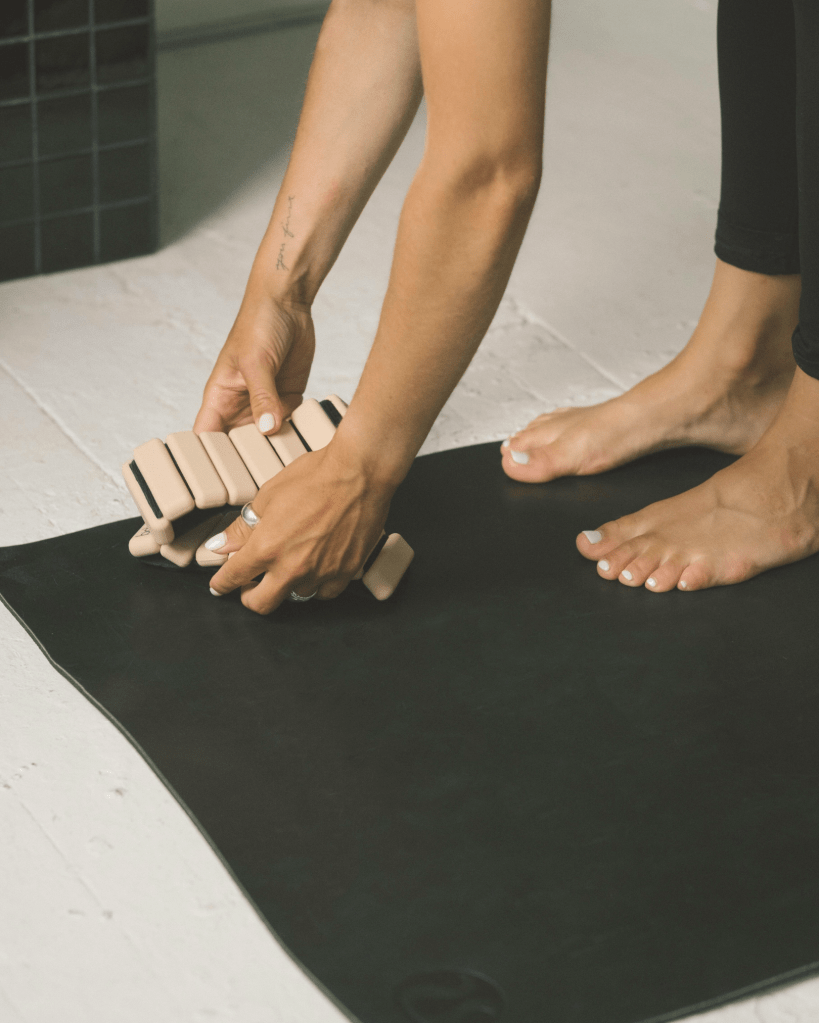
Many trauma survivors feel that therapeutic tools only work when the environment is perfect: in a therapy room, on a yoga mat, or while meditating. But healing becomes embodied when regulation appears in the middle of real life: while washing dishes, during your commute, or in moments of emotional activation.
Mornings invite us to show our nervous system what kind of day we want to create. A slow arrival: placing a warm hand over your heart, letting light touch your eyes, breathing in a way that lengthens the exhale; gently replaces urgency with grounded presence. This is not about waking up calm; it is about waking up with yourself.
During the day, the nervous system needs movement and moments of connection. Trauma often taught us to be still and alert, or constantly productive, or invisible. When we pause to stretch, to drink water with awareness, or to soften our gaze on something beautiful, we interrupt the survival narrative that says You must keep going or something terrible will happen. We learn instead: You can rest for a moment, and the world will not fall apart.
Evenings are a negotiation with the body’s accumulated stories. Muscles that have clenched in quiet fear need help letting go. Soft lighting, reduced noise, touch that soothes rather than critiques; these invitations tell the body it is no longer required to stand guard through the night. Gratitude, especially directed towards the body that has carried us through challenges, helps restore a compassionate internal dialogue where judgement once lived.
Responding to Moments of Overwhelm
Regulation is not about avoiding dysregulation. There will be days when anxiety surges or numbness takes hold. These moments are not regressions but expressions of old survival strategies returning to protect you.
When activation rises, the heart racing, thoughts accelerating, exercises that soothe the vagus nerve help bring the system down from alarm. Slowly releasing the exhale, placing cool water on the face, or looking around the room to name what is present can create enough safety to stay in the moment.
When collapse takes over: heaviness, disconnection, emotional fog, gentle activation helps bring energy back. Warmth, grounding pressure, slow rocking or stepping, and sensory stimulation can remind the body that life is still here and you are still part of it.
Both states respond to kindness, not force.
Regulation in Relationship: We Heal Together
Many trauma survivors learned that other people were unsafe. Yet neuroscience shows that regulation develops most efficiently in relationship. Co-regulation, feeling safe in the presence of another, is how we first learn emotional balance as children, and how we relearn it as adults.
A shared laugh, a quiet hug, a trusted person sitting beside you, a hand resting on your back; these experiences rebuild the nervous system’s ability to trust connection. You do not need to talk about what hurts for your body to benefit from being with someone who feels safe.
When human presence is not available, nature steps in as a co-regulator. Trees, animals, water, and sky offer a grounded, nonjudgmental relational environment. They breathe with us.
Creating Your Personal Rhythm of Safety
Rather than overwhelming yourself with tools, choose one ritual for the morning, one for the day, and one for the evening. Treat them as daily gestures of self-respect. Notice how your body responds over time. Let your rituals evolve with you as your survival strategies slowly retire.
A small moment practised consistently becomes a pathway in the nervous system. A pathway becomes familiarity. Familiarity becomes safety. Safety becomes trust.
And trust becomes freedom.

Support and Resources for Daily Regulation
Books
- Anchored by Deb Dana
- Self-Compassion by Kristin Neff
- The Body Keeps the Score by Bessel van der Kolk
- Waking the Tiger by Peter Levine
Therapeutic Approaches
- Somatic Experiencing
- Internal Family Systems
- Polyvagal-informed therapy
- Trauma-sensitive mindfulness or yoga
Crisis & Support (UK)
- Mind UK: 0300 123 3393
- Samaritans: 116 123 (24/7 support)
- National Domestic Abuse Helpline: 0808 2000 247
If you are in immediate danger or currently unsafe, please reach out for urgent professional help. You do not need to navigate this alone.
Reflection: A Daily Devotion to Wholeness
Your nervous system is not the enemy. It is the part of you that has worked the hardest. It has kept you alive through experiences that should never have been endured.
Every ritual you choose: every intentional breath, every soft touch, every moment of rest, is a way of saying:
Thank you for protecting me. You can stand down now. We are safe enough to feel.
Healing is not about becoming a different person. It is the remembrance that beneath the vigilance, beneath the shutdown, beneath every survival adaptation, there is a Self that has always been whole.
And that Self can learn to lead the body back to peace, one gentle ritual at a time.
 Metamorphosis Wellness
Leave a comment